Telescope Care 101: 7 Simple Habits to Protect Your Investment

A well-made telescope can genuinely last for decades — the optics themselves rarely wear out through normal use. Almost all the damage and performance issues owners run into come from a small handful of avoidable habits, most of which take no extra time once they become routine. This guide walks through exactly what to do (and what to avoid) to keep your telescope performing like new for years, whether it's your first month of ownership or your fifth year.

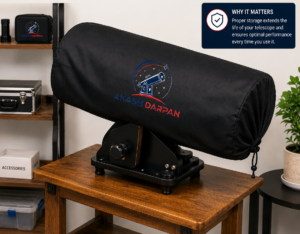
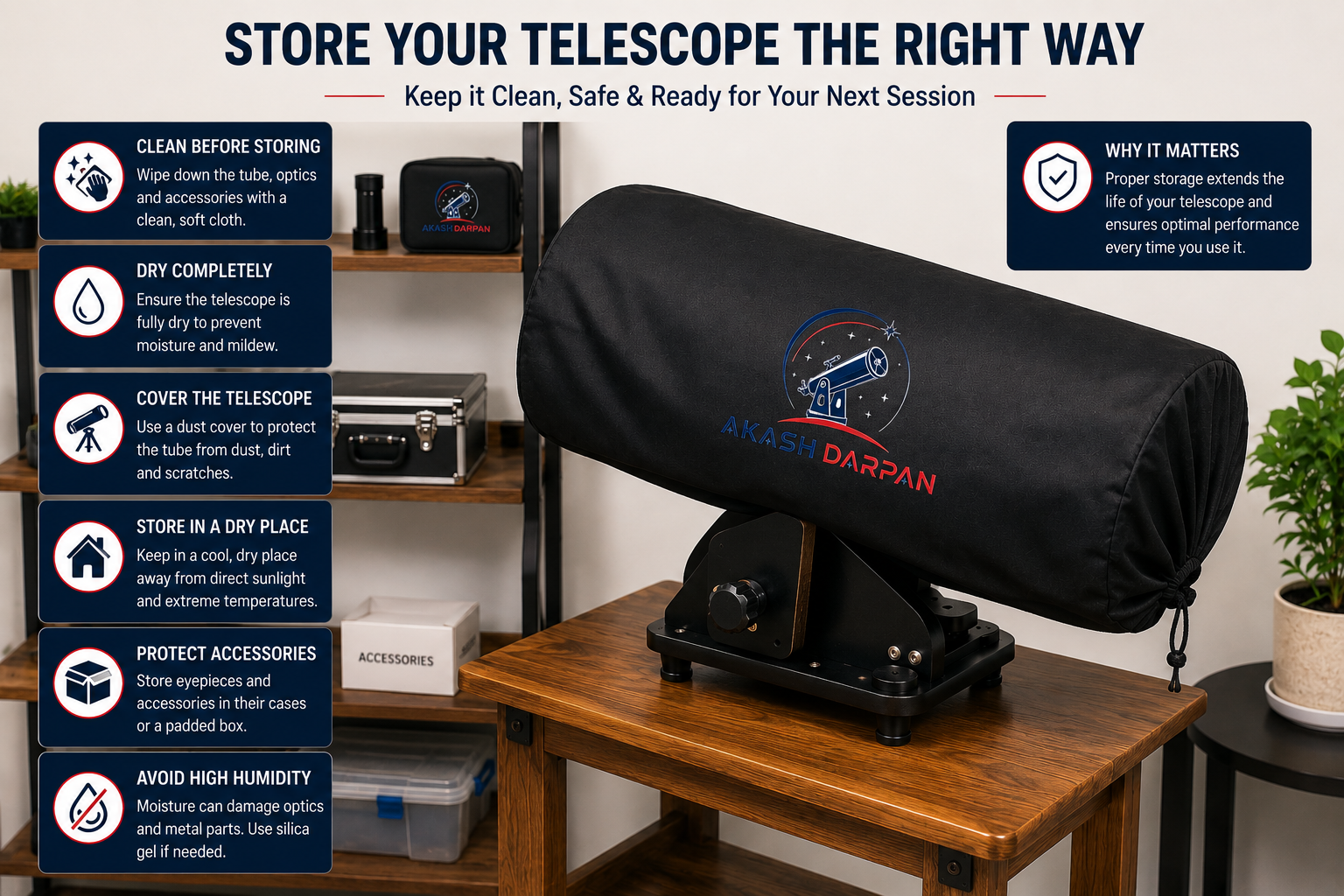
1. Keep It Covered When Not in Use

Dust is the single biggest everyday enemy of your optics — not because a little dust ruins image quality (it barely affects it at all), but because dust accumulation over months eventually requires a proper cleaning, which carries its own small risk if done carelessly.

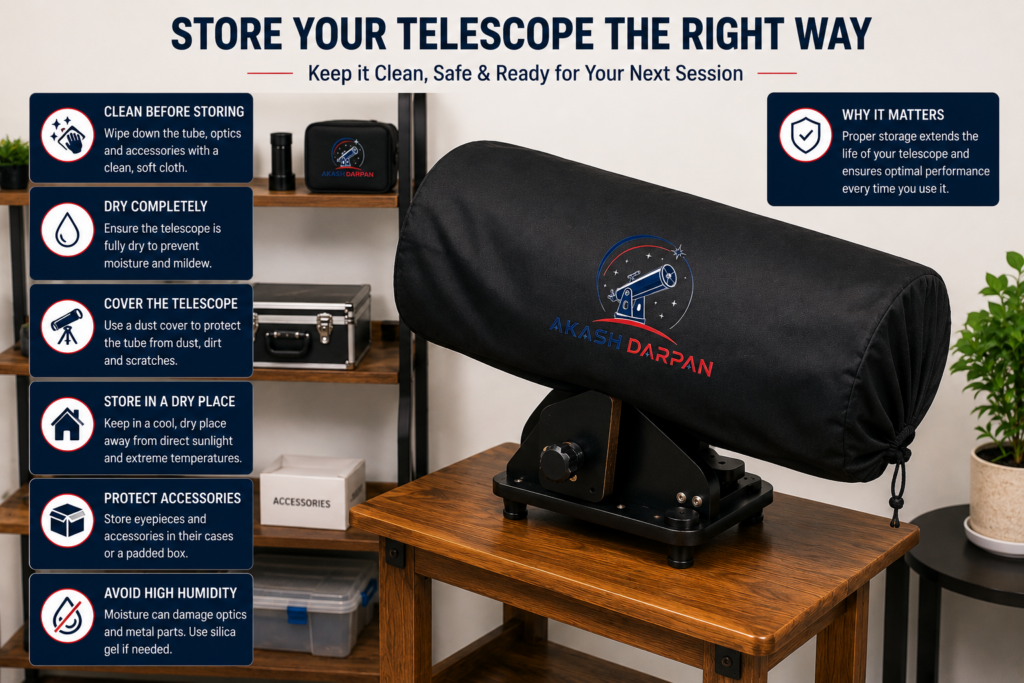
Always replace the lens cap or mirror cover immediately after each session, and store your telescope in its bag or case rather than leaving it out in the open. This one habit alone prevents the majority of the dust and grime buildup that eventually pushes owners toward unnecessary cleaning.

2.Resist the Urge to Clean the Lens or Mirror Too Often

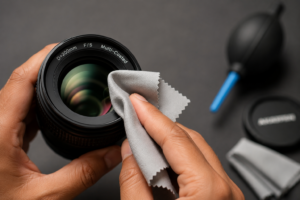
This surprises a lot of new owners: cleaning your optics too frequently causes more long-term damage than the dust itself. A few visible specks of dust on a lens or mirror have an almost imperceptible effect on the images you see through the eyepiece. Unnecessary or overly vigorous cleaning, on the other hand, risks tiny scratches on the coated glass surface — and those scratches genuinely do affect image quality, permanently.

Clean only when there's visible residue, fingerprints, or genuine grime buildup — and always use a proper optical cleaning cloth or air blower designed for camera or telescope lenses, never a regular tissue, cloth, or your shirt sleeve, all of which can carry abrasive fibres or dust particles that scratch the coating.

3. Let It Acclimate to Outdoor Temperature

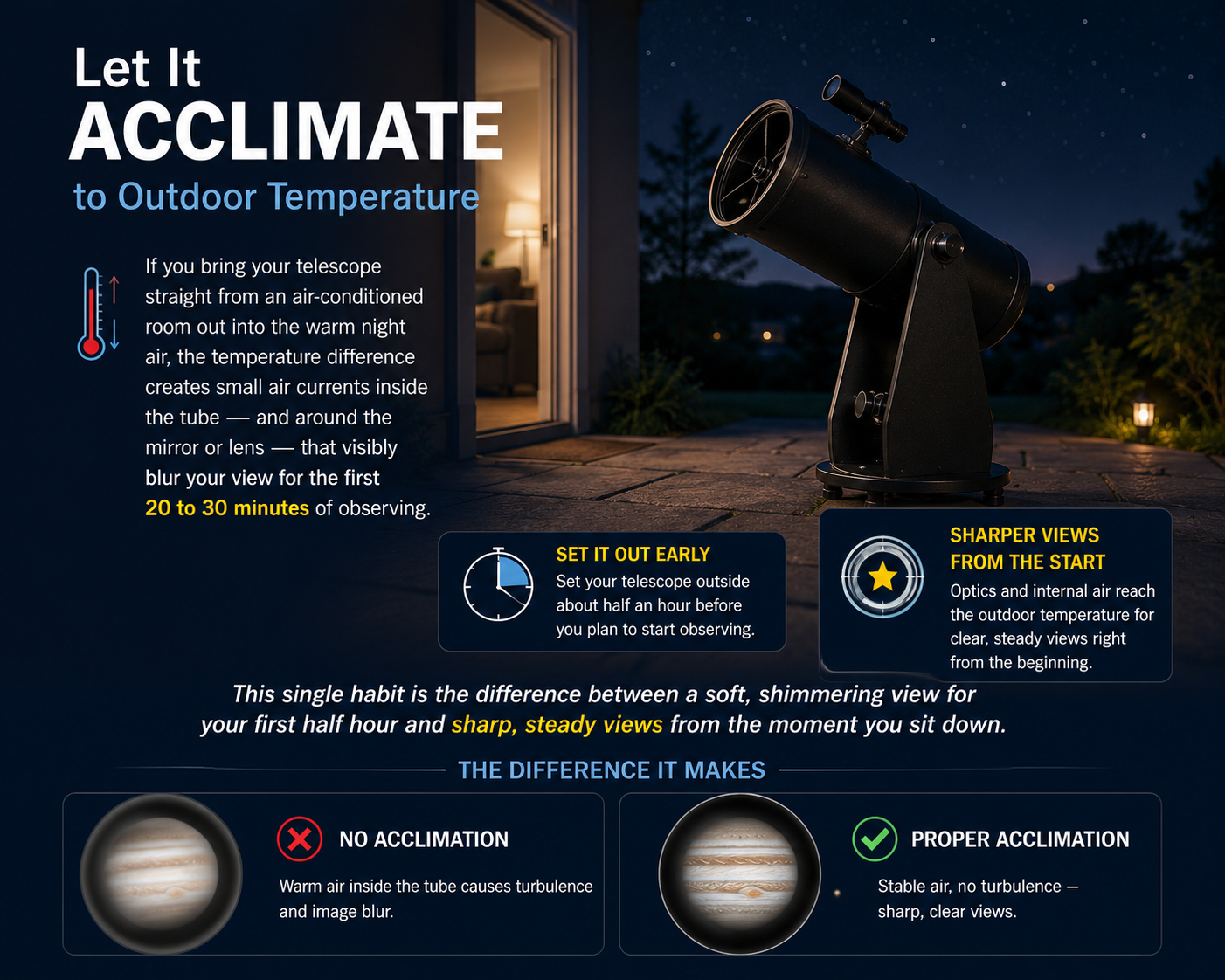
If you bring your telescope straight from an air-conditioned room out into the warm night air, the temperature difference creates small air currents inside the tube — and around the mirror or lens — that visibly blur your view for the first 20 to 30 minutes of observing.

Set your telescope outside about half an hour before you actually plan to start observing, so the optics and internal air fully reach the outdoor temperature. This single habit is the difference between a soft, shimmering view for your first half hour and sharp, steady views from the moment you sit down.

4. Store It Upright and Secure

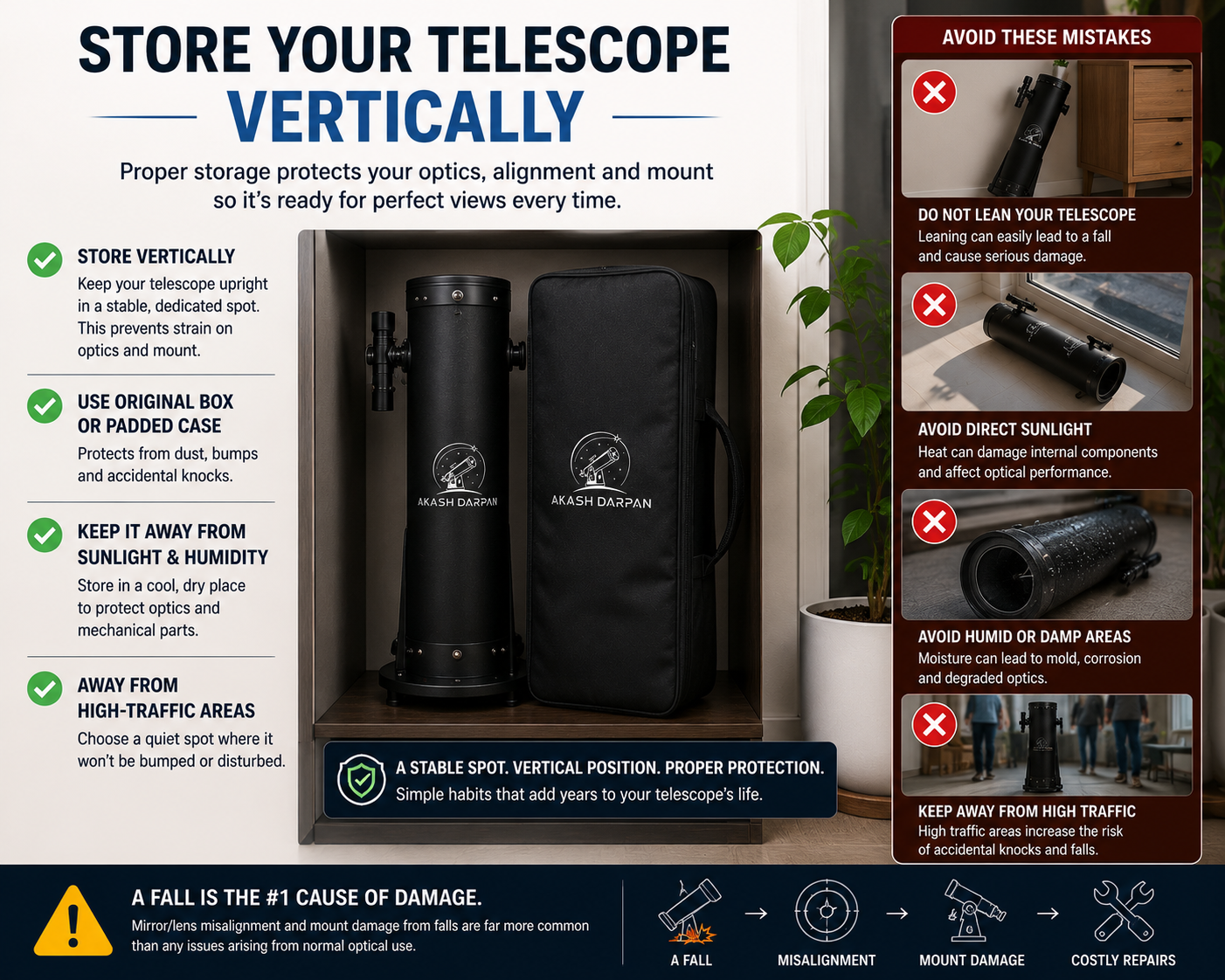
Store your telescope vertically in a stable, dedicated spot — ideally in its original box or a padded case — away from direct sunlight, humidity, and high-traffic areas where it could be knocked. Avoid leaning it casually against a wall or furniture; a fall is by far the most common real-world cause of mirror/lens misalignment and mount damage, far more common than any issue arising from normal optical use.

5. Check Collimation Periodically (for Reflectors and Dobsonians)

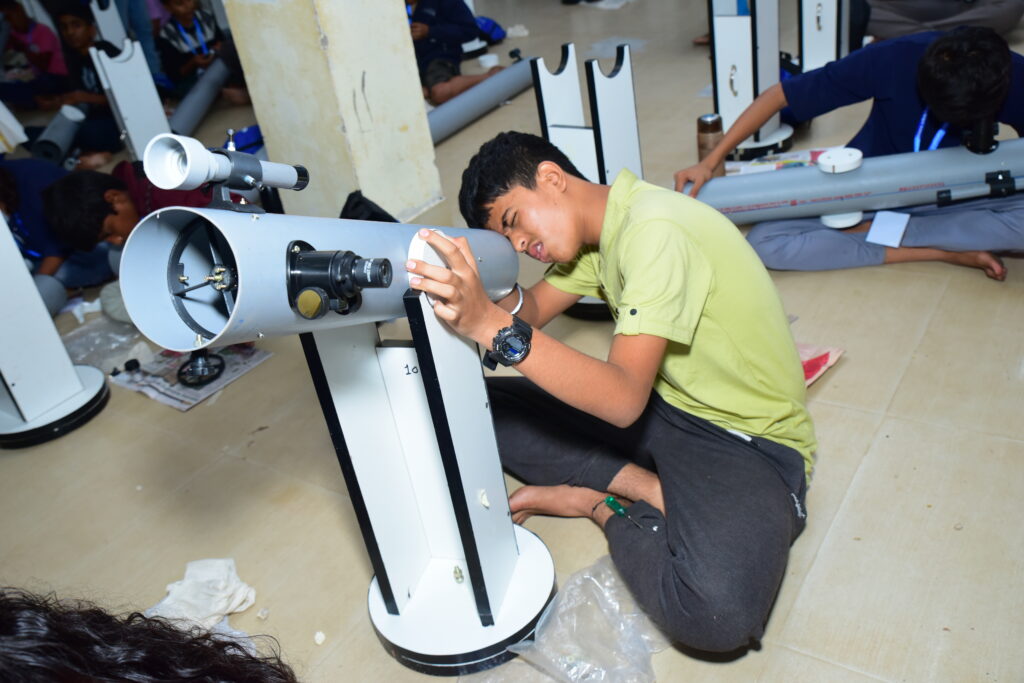
If you own a reflector or Dobsonian telescope, the mirrors occasionally shift slightly out of perfect alignment — a completely normal part of owning a mirror-based telescope, not a sign of a defective unit. This process of re-aligning the mirrors is called collimation.

The clearest sign you need to collimate is that stars appear as small, comet-shaped smudges rather than sharp points of light, particularly at higher magnification. Collimation takes just a few minutes once you've done it once or twice, and most Akash Darpan reflector and Dobsonian models include the simple tools needed to do it yourself at home.

6. Keep Moisture Away

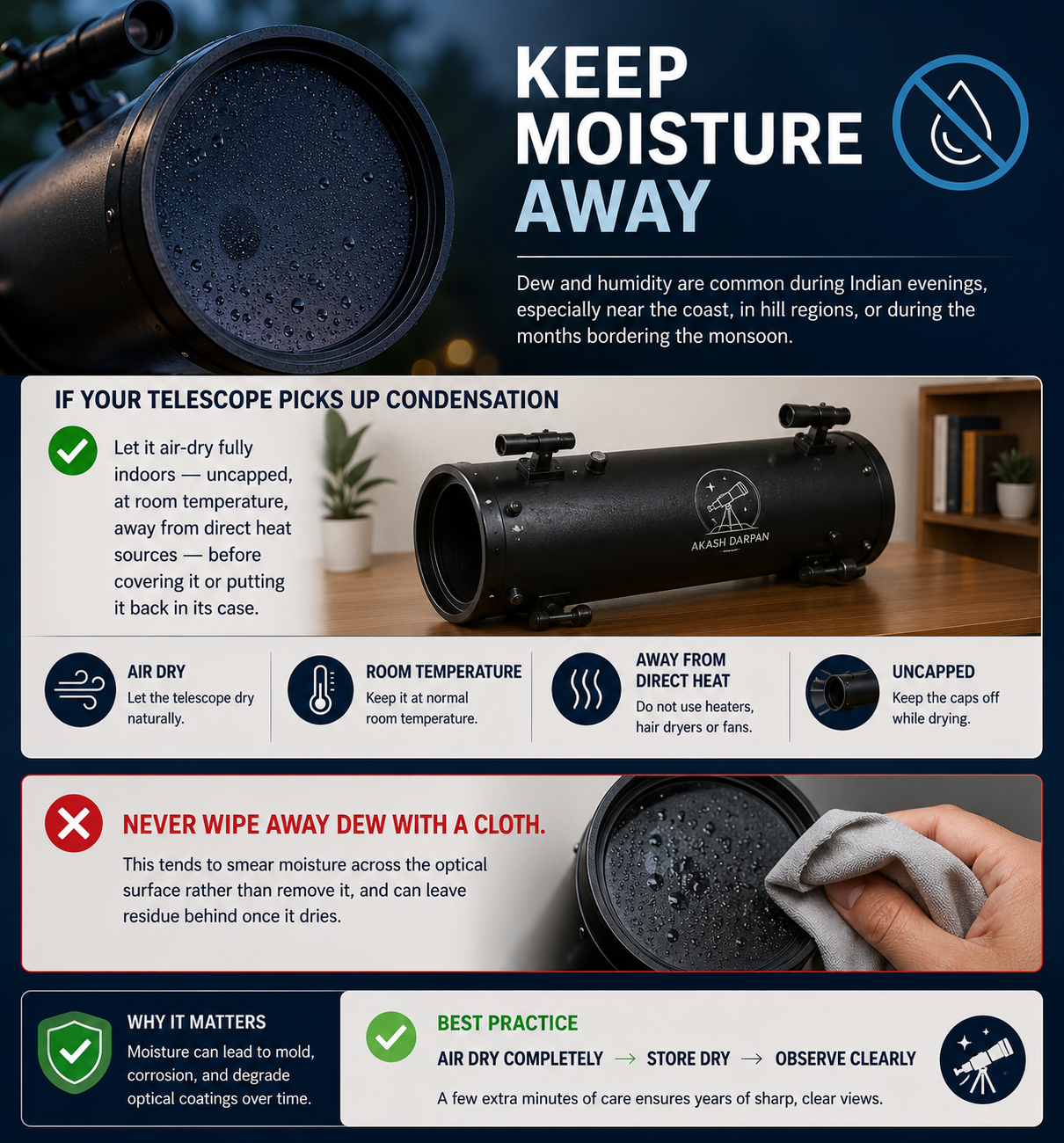
Dew and humidity are common during Indian evenings, especially near the coast, in hill regions, or during the months bordering the monsoon. If your telescope picks up condensation during a session, let it air-dry fully indoors — uncapped, at room temperature, away from direct heat sources — before covering it or putting it back in its case.

Never wipe away dew with a cloth. This tends to smear moisture across the optical surface rather than remove it, and can leave residue behind once it dries.

7.Tighten, Don't Overtighten

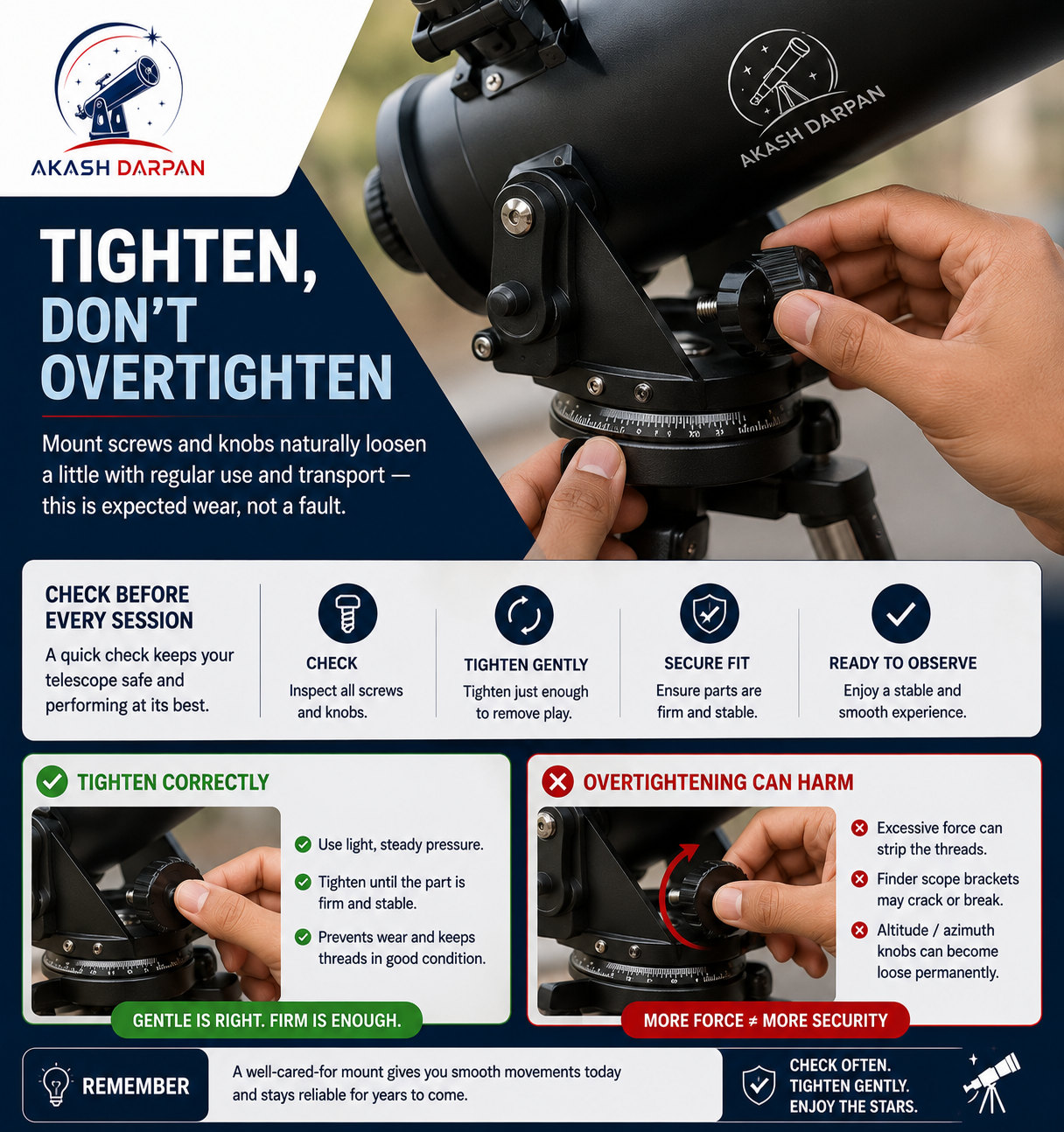
Mount screws and knobs naturally loosen a little with regular use and transport — this is expected wear, not a fault. Check them before each session, but avoid over-tightening, especially on finder scope brackets and altitude/azimuth adjustment knobs, since excessive force over time can strip the threads and make the fitting loose permanently.

When to Ask for Help

If you notice persistent blurriness that outdoor acclimation and basic collimation don't fix, or physical damage after a fall or rough transport, don't attempt DIY repairs on the optics yourself — this is one of the few situations where a well-meaning fix can turn a minor issue into a major one. Reach out to our support team instead; most issues owners worry about turn out to be simpler, and cheaper, to resolve than expected.


Have a specific issue with your telescope? Visit our Support Centre or raise a service request — we're here to help you keep observing for years to come.