Solar Eclipse Safety and Viewing Guide: What Every Skywatcher Needs to Know
A solar eclipse is one of the most dramatic sights the sky offers — the Moon sliding in front of the Sun, daylight dimming unnaturally, and for a lucky few standing in the right place, the Sun's ghostly outer atmosphere blazing into view for a few minutes of true darkness in the middle of the day.
It's also the one sky event where the excitement comes with a genuine safety rule that can't be skipped: you must never look at the Sun directly, at any point of a partial or annular eclipse, without proper solar filtration. This guide covers exactly why that matters, how to observe safely, and when India will next get to see one.
1.Why Solar Eclipses Are Different From Every Other Sky Event
Every other event we've covered — lunar eclipses, meteor showers, planetary conjunctions — is completely safe to view with the naked eye, binoculars, or a telescope, no special equipment required. A solar eclipse is the one major exception, for a simple reason: you're looking almost directly at the Sun.
Even when 99% of the Sun's disc is covered by the Moon during a partial eclipse, the remaining sliver is still bright enough to cause serious, permanent retinal damage in seconds — often without the viewer feeling any pain while it happens, since the retina itself has no pain receptors. This is precisely why solar eclipse safety deserves its own dedicated guide rather than a footnote.
2. The Three Types of Solar Eclipse
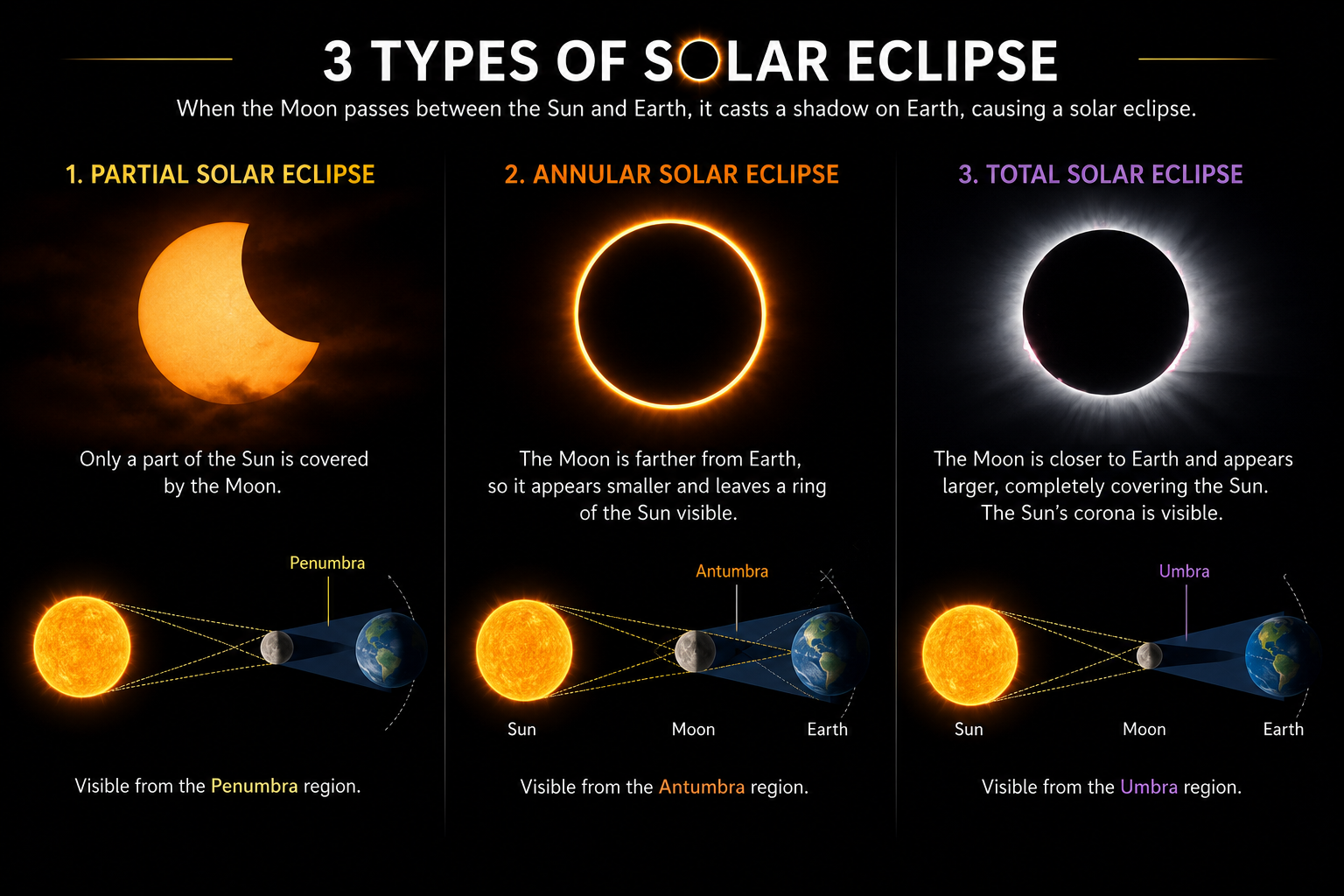
- Total solar eclipse — the Moon completely covers the Sun's disc, and for a brief window (typically one to a few minutes), the Sun's outer atmosphere, the corona, becomes visible as a pale halo. This is the only phase of any solar eclipse considered safe to view briefly without a filter — and only within the narrow path of totality, only for the seconds when the Sun's face is 100% covered.
- Annular solar eclipse — the Moon is slightly farther from Earth in its orbit and doesn't fully cover the Sun, leaving a bright ring (the "ring of fire") visible around its edge at maximum eclipse. Because a sliver of the Sun's surface remains visible throughout, full-time solar filtration is required for the entire event — there is no safe unfiltered moment.
- Partial solar eclipse — the Moon covers only part of the Sun's disc, without ever fully aligning. This is the most common type visible from any given location, and again requires solar filtration at every stage, since the Sun's surface is never fully blocked.
How to Watch Safely
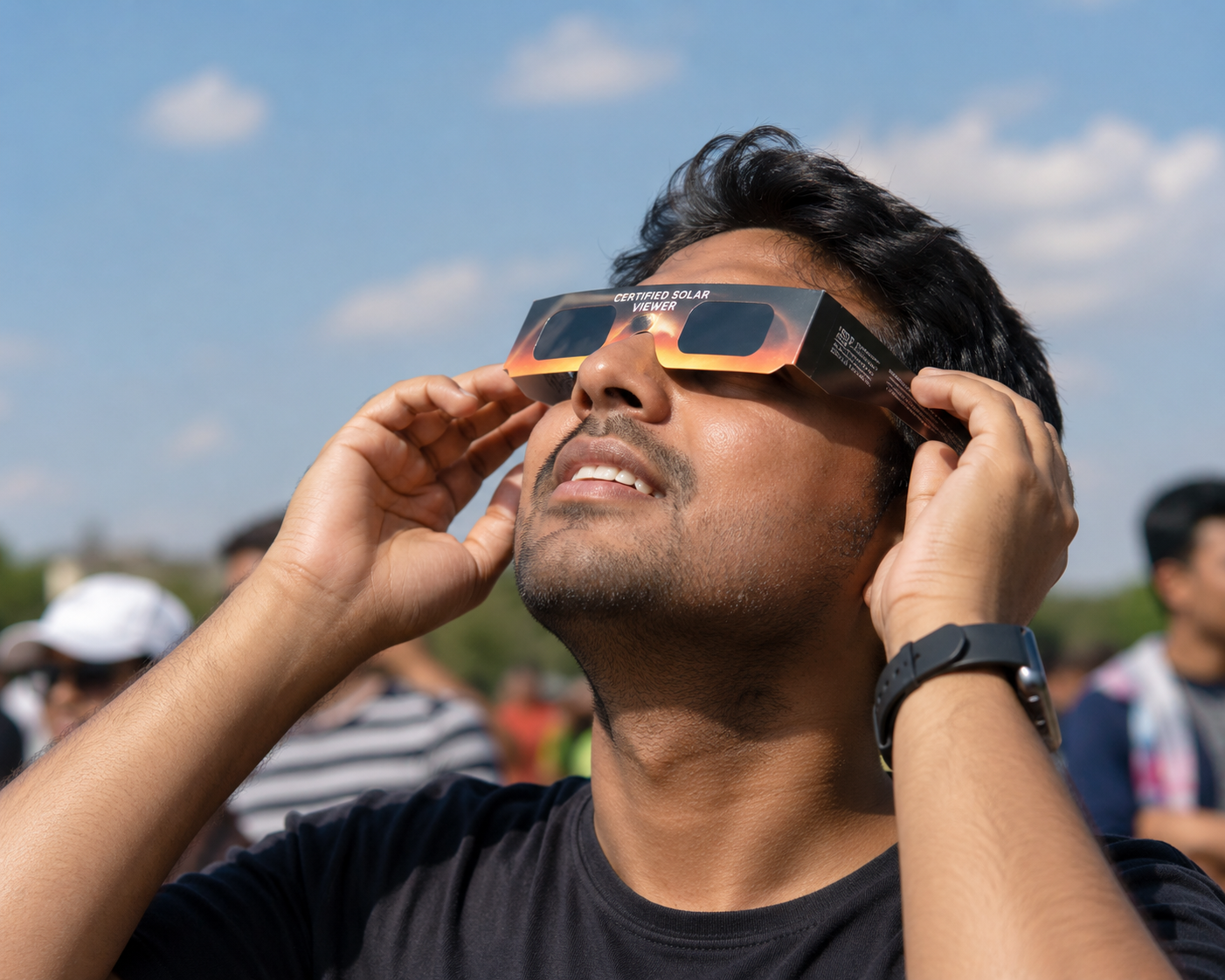
- Use certified solar eclipse glasses, meeting the ISO 12312-2 international safety standard — these are thousands of times darker than ordinary sunglasses and are the simplest, cheapest way to view any solar eclipse directly.
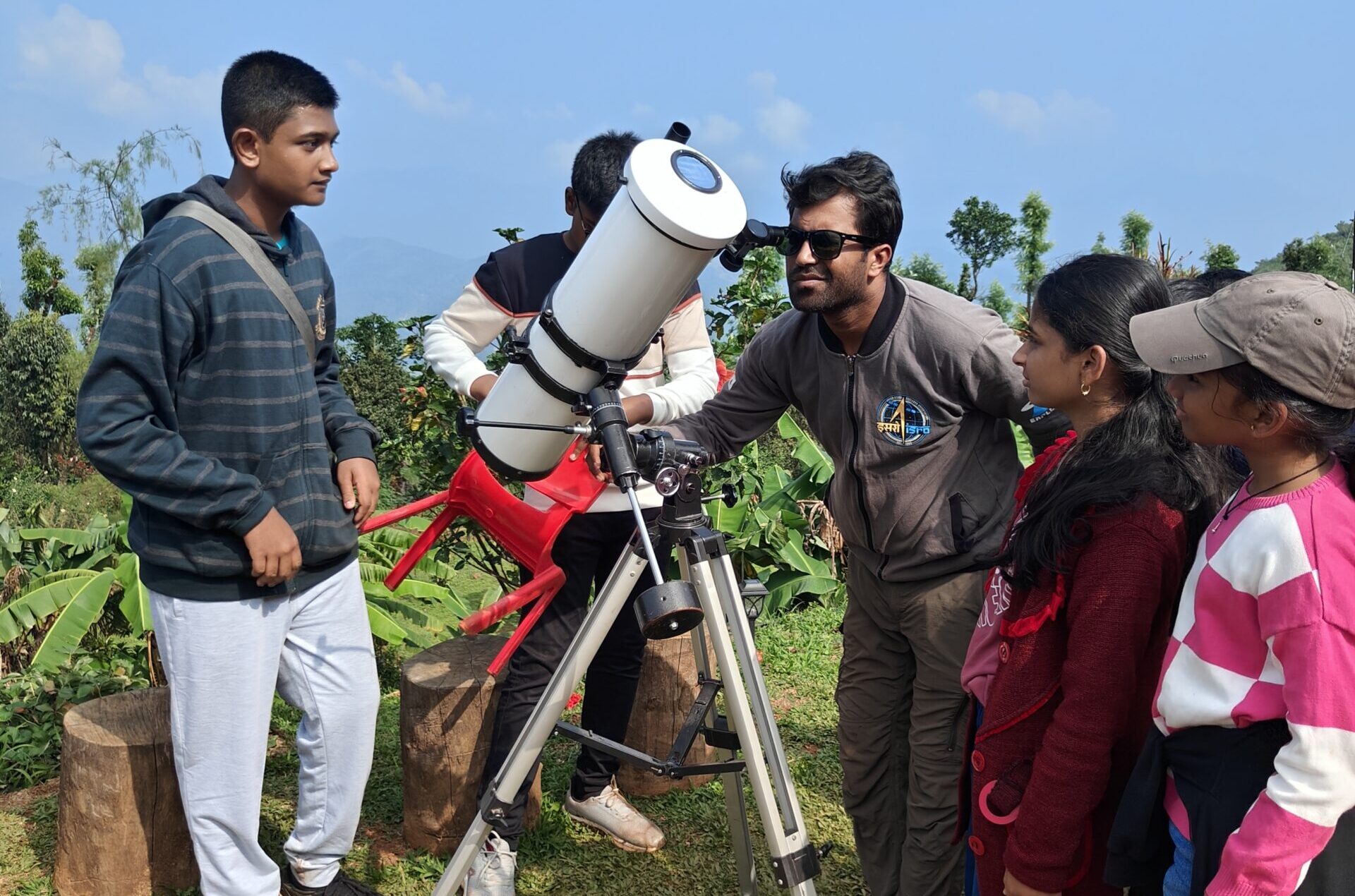
- Never use a telescope, binoculars, or camera without a proper solar filter fitted over the front (light-gathering) end. A telescope concentrates sunlight dramatically, and pointing an unfiltered telescope at the Sun — even briefly, even through a viewfinder — can cause instant, severe eye damage and can also damage the instrument itself.
- Try a projection method for a completely equipment-free option. A simple pinhole projector — even just a small hole in a piece of card, held so sunlight passes through it onto a second surface — safely projects an image of the crescent Sun without anyone looking toward the Sun at all. This is an excellent, zero-cost option for group or classroom viewing.
- Regular sunglasses, smoked glass, exposed film, and CDs are not safe substitutes. None of these block the invisible infrared and ultraviolet radiation that causes the actual retinal damage, regardless of how dim the Sun appears to your eyes through them.
- Supervise children closely. The natural instinct to sneak a glance without glasses on is strong, especially at the most dramatic moment of the eclipse — direct adult supervision matters more during a solar eclipse than almost any other family sky-watching event.
3.Telescope Solar Filters: What to Know
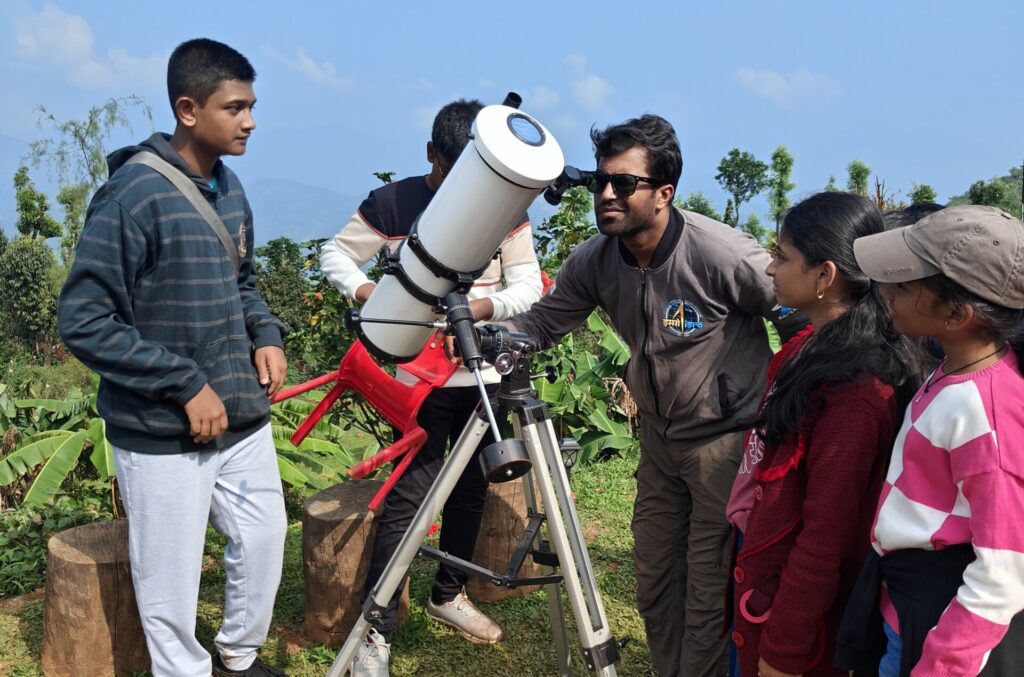
If you want to observe a solar eclipse through a telescope — which reveals genuine detail like sunspots and, during totality, the delicate structure of the corona — you'll need a certified solar filter designed to fit securely over the front of your telescope's tube, never a filter that screws into the eyepiece end. Eyepiece-end solar filters were common decades ago and are now considered unsafe, since the concentrated heat at the eyepiece end can crack the filter mid-observation without warning.
A correctly fitted front-mounted solar filter blocks over 99.99% of incoming sunlight before it ever reaches the telescope's optics, making it safe for extended viewing and safe for the instrument itself.
When Will India Next See a Solar Eclipse?
Here's the honest, practical answer for anyone in India planning ahead: there is no solar eclipse visible from India for the remainder of 2026. The total solar eclipse on August 12, 2026 happens during India's nighttime hours and isn't visible here at all, and the annular "ring of fire" eclipse earlier in 2026 was confined to Antarctica and the far southern oceans.
The next solar eclipse India will actually get to see is a partial solar eclipse on August 2, 2027, visible from western and northwestern India — including cities like Jaisalmer, Bhuj, and Mumbai — low in the sky shortly before sunset. This partial view in India is part of a much larger total solar eclipse sweeping across Spain, North Africa, and the Middle East that day, with totality lasting an exceptionally long six minutes and twenty-three seconds along its main path — one of the longest total solar eclipses of the century, though that full totality won't be visible from Indian soil.
It's over a year away, but for schools, astronomy clubs, and anyone planning a proper viewing event, that's exactly the kind of lead time that makes for a well-organized, well-equipped public viewing session rather than a last-minute scramble for eclipse glasses.
Planning Ahead for a Group or School Viewing
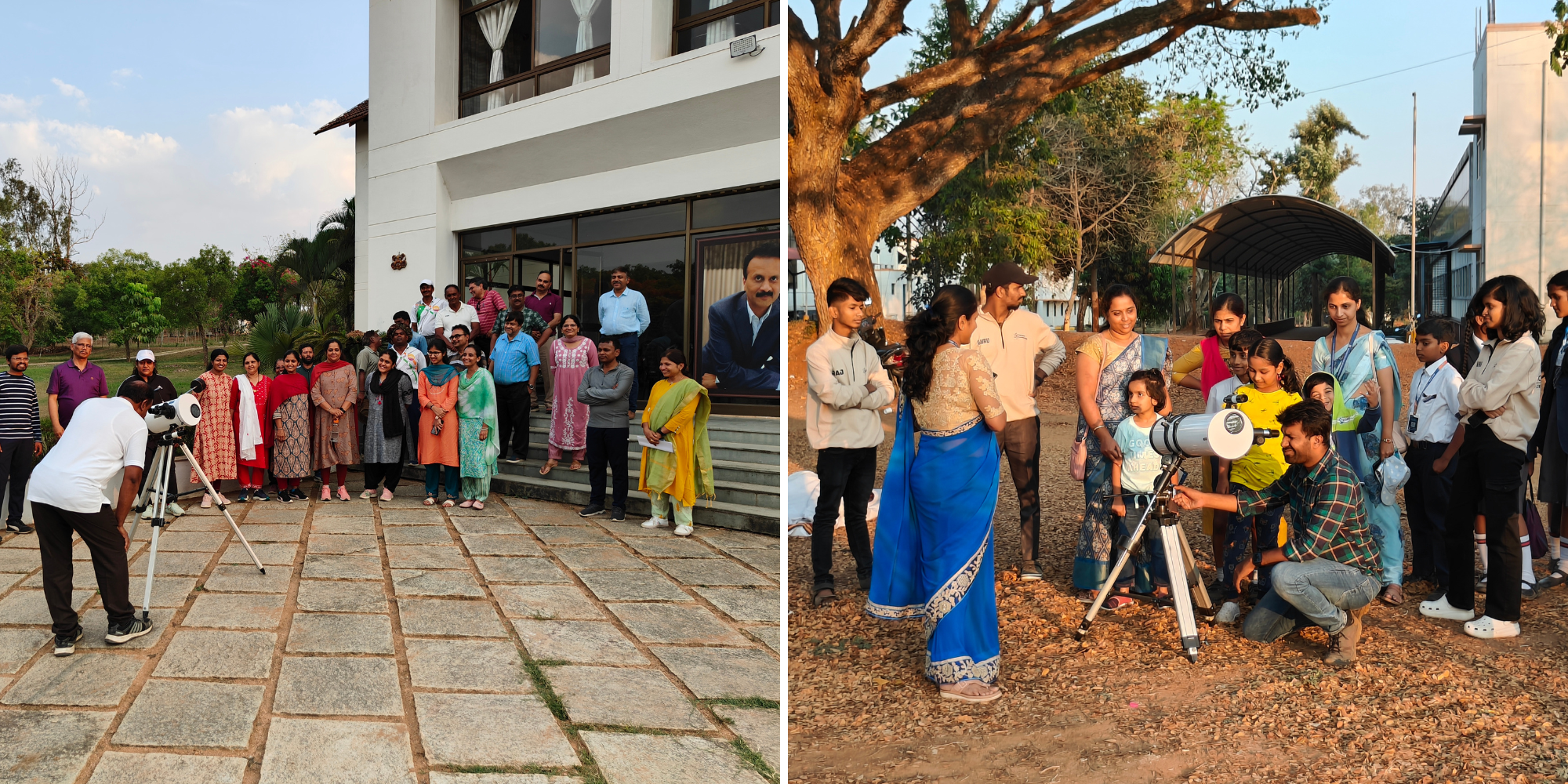
Solar eclipses make exceptional group science events — provided safety is planned for in advance, not improvised on the day:
- Order certified ISO 12312-2 eclipse glasses well ahead of time, in enough quantity for your expected group size, and inspect each pair for any scratches or pinholes before the day.
- If using a telescope, mount a proper front-end solar filter and have it checked and securely fitted before the event, not experimented with for the first time that morning.
- Set up a simple pinhole projector as a backup, equipment-free viewing option for anyone without glasses.
- Brief the group on safety rules beforehand, especially with children present, so the excitement of the moment doesn't override the one rule that actually matters.
Planning ahead for the August 2027 eclipse, or want to add proper solar filters to your telescope setup now? Browse our Filters & Accessories range, or contact our Institutional Solutions team to plan a safe group viewing event.